
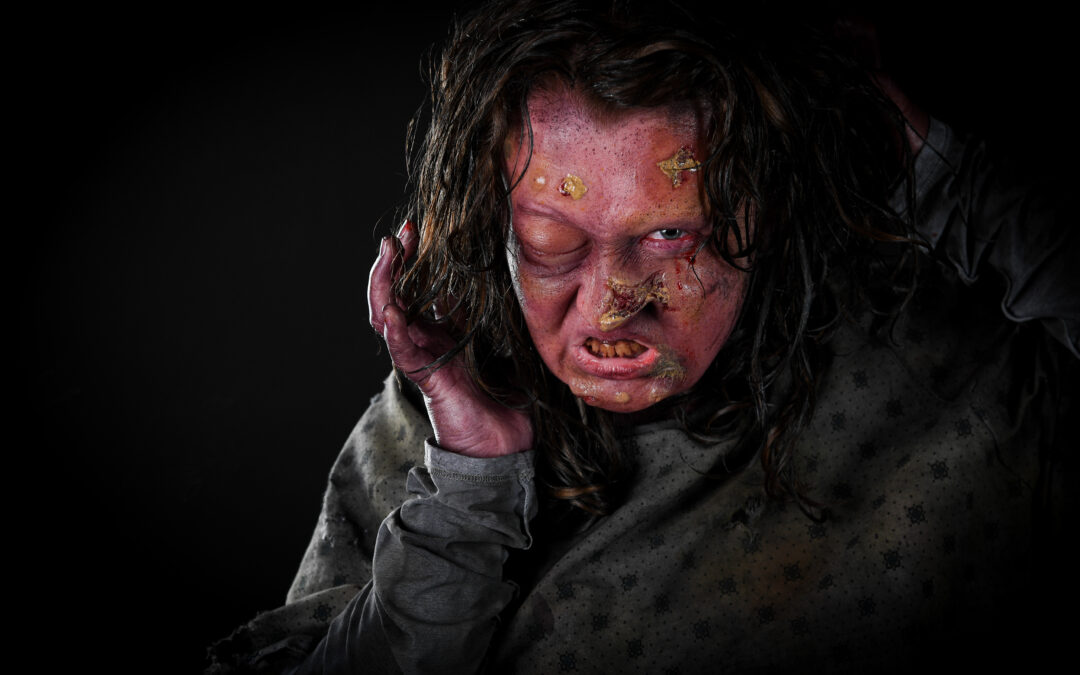
Special effects makeup is one of the most creative — and one of the most technically demanding — careers in the entire entertainment industry. It’s the discipline behind every prosthetic, every wound, every alien, every undead extra, every aging transformation, and every creature you’ve ever seen on screen, on stage, or walking through a haunted house.
It’s also a career path that’s grown significantly in the last decade. As film and television audiences push back against over-reliance on CGI, practical effects have come surging back into demand. Productions like Stranger Things, The Last of Us, A Quiet Place, and countless theme park and haunt attractions have made the case that nothing beats a well-built silicone prosthetic and a skilled SFX artist behind it.Contact Cosmix School of Makeup Artistry today to request more information.
If you’re drawn to this side of the makeup industry, here’s exactly what it takes to break in.
What an SFX Makeup Artist Actually Does
Special effects makeup artists design, fabricate, and apply effects that can’t be achieved with conventional makeup alone. The work covers a huge range:
- Prosthetic appliances (silicone, latex, foam, gelatin)
- Wounds, scars, burns, bullet hits, and trauma effects
- Character transformations and aging
- Creature design and full-body character builds
- Dental appliances and false teeth
- Blood effects and breakaway makeup
- Bald caps, life casts, and head molds
- Body painting and full-body airbrush work
Some SFX artists specialize in on-set application, working alongside film and television productions to apply and maintain effects during shooting. Others specialize in the lab side — sculpting, molding, casting, and finishing the prosthetic pieces that on-set artists apply. Most working SFX artists do both at different points in their careers.
The Core Skills You Need
SFX makeup demands a different skill stack from beauty or fashion work. The foundation includes:
- Sculpting. You need to be able to sculpt in oil-based and water-based clays, working from reference images or original designs.
- Mold making. Creating accurate negatives of sculpts so you can produce repeatable prosthetic pieces.
- Running pieces. Mixing and pouring silicone, foam latex, or gelatin into molds and properly demolding finished prosthetics.
- Application. Adhering prosthetics seamlessly to a performer’s face or body so they look like real skin under camera.
- Painting and finishing. Color-matching and detail-painting prosthetics so they blend with the performer’s natural complexion.
- Life casting. Taking accurate full-face or full-body casts of performers to build custom-fit pieces.
- Speed and consistency. Especially for theme park, haunt, and high-volume production work.
- Color theory and anatomy. Understanding how skin tones, bruising, decomposition, and trauma look in reality.
These are technical craft skills that take real instruction and repetition to develop. They aren’t learnable from YouTube alone, and they aren’t taught in most cosmetology or general makeup programs.
Training Paths
There are essentially three ways people try to become SFX artists, and only one of them works reliably.
Self-teaching. Possible but slow and limited. The challenge with self-teaching SFX is twofold: you can’t easily access professional materials, mold-making equipment, and lab space at home, and you have no feedback loop telling you when your technique is off. Most self-taught SFX artists hit a ceiling around basic appliance application and have a hard time advancing into sculpting, fabrication, and on-set work.
General makeup school. Many general makeup or cosmetology programs include a brief SFX module — usually a few weeks of basic prosthetic application. That’s enough to know whether you like the discipline, but it’s not enough to build a real career in it.
Dedicated SFX or comprehensive makeup programs. This is the path that produces working SFX artists. There are only a handful of accredited schools in the country that offer in-depth special effects curriculum alongside the rest of the makeup arts. These programs teach the full SFX stack — sculpting, mold making, running pieces, application, painting, dental appliances — across enough hours to build real competence.
Inside Dedicated SFX Training
A serious SFX program covers significantly more than appliance application. You should expect training in:
- Designing and sculpting original characters and creatures
- Working with multiple prosthetic materials (silicone, latex, foam, gelatin)
- Building custom dental appliances and bite plates
- Life casting techniques for face, head, and body
- Constructing molds (one-piece, multi-piece, encapsulating)
- Pre-painting and intrinsic coloring of silicone prosthetics
- Hair work — punching beards, brows, and creature hair
- Bald cap construction and application
- Wound kits, blood effects, and trauma simulation
- On-set protocols for working with directors and performers
At Cosmix, this curriculum is built into the Master Makeup Artistry Pro program. The Pro program is the recommended track for students who want to work in film, television, theme parks, SFX labs, or any environment where character and creature work is the focus. It also includes a Skin Care Specialist license, which removes the legal barriers to freelance work in Florida and most other states.
Career Paths in SFX
SFX training opens up significantly more career options than most people realize:
- Film and television set work. Working as part of a makeup department on productions, applying and maintaining effects across shooting days.
- SFX lab and shop work. Designing and fabricating prosthetics, creatures, and appliances in dedicated effects shops. Studio-based, project-driven work.
- Theme park makeup. Daily character work and seasonal haunt production at parks like Universal Orlando, Walt Disney World, Busch Gardens, and SeaWorld.
- Haunt and Halloween production. Halloween Horror Nights, Howl-O-Scream, Fright Nights, and dozens of regional haunts hiring SFX teams every fall.
- Music videos and concert tours. Especially for genres that lean into theatrical visuals.
- Theater. Broadway, regional theater, opera, and stylized productions like Cirque du Soleil.
- Video game and toy industry. Motion capture suit design, character modeling, and physical prototypes for tie-in products.
- Cosplay and convention work. Fabrication for clients, brand activations, and competition pieces.
Most working SFX artists move between several of these throughout their careers, often building businesses that mix freelance set work with steady lab contracts.
Building an SFX Portfolio
Your portfolio is what gets you hired in this industry. Period.
A strong SFX portfolio should demonstrate:
- Range across multiple types of effects (trauma, character, creature, aging)
- Process documentation, not just final shots — sculpts, molds, paint stages
- Photography under professional lighting that shows the work the way it would read on camera
- Original character designs, not just executions of existing characters
- Collaboration credits where applicable (productions, photographers, performers)
The artists who get hired aren’t necessarily the most talented. They’re the ones whose portfolios prove they can deliver under real production conditions.
Career Outlook and Pay
According to the U.S. Bureau of Labor Statistics, the average Special FX makeup artist earned $53 per hour and just under $110,000 annually in 2023 — one of the highest-earning specialties in the makeup industry.
The income trajectory typically starts with seasonal haunt work, smaller productions, and lab assistant roles, then scales as your portfolio and network grow. Established SFX artists working consistently across film, television, theme park, and lab projects can build six-figure careers, and department heads or shop owners earn significantly more.
The career is project-based and somewhat unpredictable, but for artists who love the craft and treat it like a business, it’s one of the most rewarding paths in the entire entertainment industry.
Ready to take the next step? Cosmix Makeup School in Fort Lauderdale is one of the few accredited makeup schools in the country offering comprehensive special effects training, including silicone and latex prosthetics, dental appliances, life casting, and full character fabrication. The Master Makeup Artistry Pro program is the recommended track for aspiring SFX artists. Book a virtual or in-person tour to see the SFX lab and meet the instructors who train working effects artists.