
The Appeal of the Self-Taught Route
Many successful makeup artists begin as self-taught creatives. Online tutorials allow beginners to experiment with products, practice techniques, and explore different makeup styles from home.
The self-taught path may seem attractive because:
- Tutorials are widely available online
- Learning can happen at your own pace
- There is no immediate tuition cost
- Beginners can experiment creatively
For hobbyists or casual beauty enthusiasts, self-learning can be a great starting point. It encourages creativity and helps artists discover their interests before investing in professional training.
However, self-teaching also comes with limitations — especially for individuals who want to turn makeup artistry into a full-time profession.
The Biggest Challenge With Self-Taught Learning
 One of the biggest challenges self-taught artists face is the lack of structured education. Online tutorials often focus on trends rather than foundational skills needed for professional work.
Without professional guidance, artists may struggle with:
1.Sanitation and hygiene standards
2. Color theory
3. Lighting and photography makeup
4. Skin analysis
5. Client communication
6. Time management
7. Production set etiquette
8. Portfolio development
9. Professional business skills
Self-taught artists also typically learn through trial and error, which can slow progress significantly.
While online learning may help develop creativity, it often lacks the technical depth and hands-on correction that professional instruction provides.
How Makeup School Accelerates Skill Development
Professional makeup schools provide structured training designed to help students build technical skills step-by-step. Instead of randomly learning trends online, students follow organized curricula that cover both creative artistry and industry standards.
At Cosmix Makeup School, students receive hands-on instruction in:
- Beauty makeup
- Bridal artistry
- Fashion and editorial makeup
- Film and television makeup
- Theater makeup
- Special effects makeup
- Character design
- Skin care education
Programs combine demonstrations, practical exercises, studio projects, and portfolio-building opportunities that help students gain confidence and professional experience.
Because students train consistently under professional guidance, they often develop skills faster than artists learning independently.
Portfolio Building Makes a Major Difference
A strong portfolio is one of the most important tools for building a makeup career. Employers, photographers, production companies, salons, and clients want to see professional examples of your work before hiring you.
This is one area where makeup school offers a major advantage.
Professional programs often provide access to:
- Photography shoots
- Studio lighting environments
- Models and creative collaborations
- Fashion-style projects
- Special effects demonstrations
- Professional critique and feedback
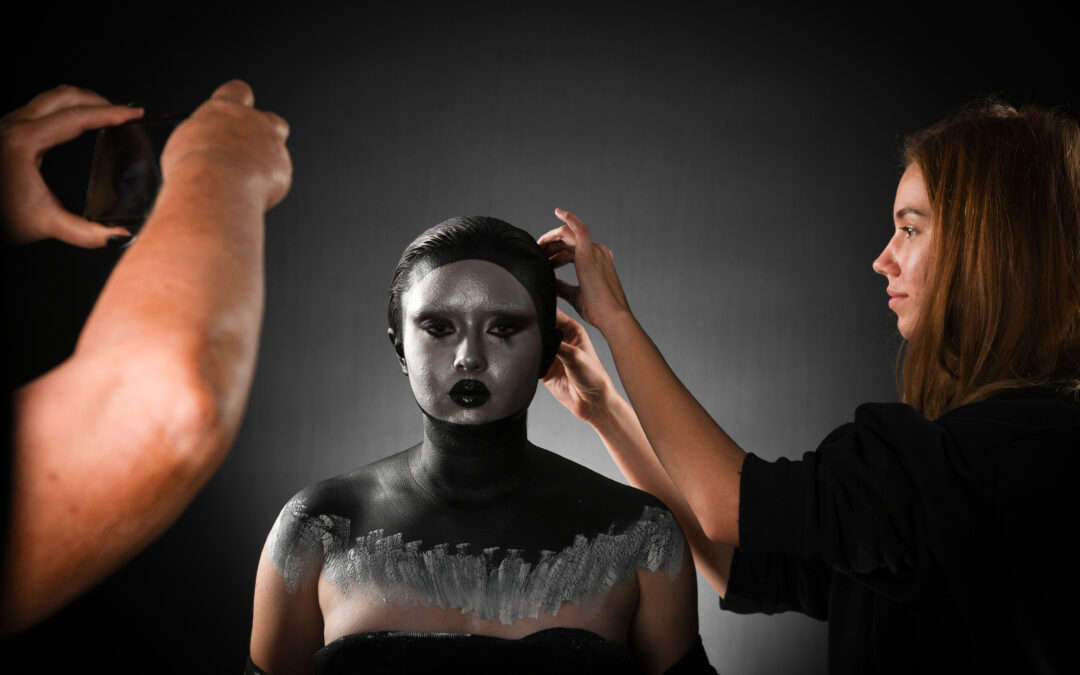
At Cosmix, students build portfolio-ready work throughout their training while practicing in creative studio environments that simulate real industry experiences.
Self-taught artists may eventually build strong portfolios as well, but doing so often takes longer without access to professional instructors, models, photography resources, and collaborative projects.
Industry Connections Matter More Than Many Beginners Realize
The beauty and entertainment industries are highly relationship-driven. Networking, mentorship, and industry exposure can open doors that technical talent alone may not.
Professional makeup schools often help students connect with:
- Industry instructors
- Professional photographers
- Creative directors
- Production environments
- Beauty professionals
- Fellow artists and collaborators
At Cosmix, students learn from instructors with real-world beauty and entertainment experience while gaining exposure to industry-style workflows and expectations.
These connections can become valuable when students begin searching for freelance opportunities, production work, salon positions, or creative collaborations after graduation.
Cost vs Long-Term Career Potential
 One reason some artists avoid makeup school is cost. Professional education requires financial investment, while online tutorials are often free.
However, it is important to look beyond short-term costs and consider long-term career opportunities.
Professional training may help artists:
- Develop stronger technical skills faster
- Build higher-quality portfolios
- Qualify for licensing opportunities
- Access more professional job opportunities
- Increase credibility with clients and employers
- Learn multiple makeup disciplines
Programs like the Master Makeup Artistry Pro program at Cosmix combine beauty, fashion, television, theater, special effects, and skincare education into one structured learning experience.
For artists pursuing serious long-term careers, professional training can become an investment in future earning potential and career growth.
Why Licensing Can Matter
Licensing requirements are another important consideration, especially in Florida. Depending on the services provided, makeup artists may need skincare or cosmetology licensing to work professionally in certain environments.
Self-taught artists may overlook these requirements until later in their careers.
Cosmix programs that include skincare education help students prepare for Florida Skin Care Specialist licensing opportunities while also developing advanced makeup artistry skills. This combination can provide broader career flexibility within salons, spas, bridal services, and freelance artistry.
Which Path Is Better?
There is no single path for every artist. Some talented professionals begin entirely self-taught, while others thrive in structured educational environments. But for students seeking faster technical growth, stronger portfolios, professional mentorship, and industry preparation, makeup school often provides a clearer path toward long-term career opportunities. Contact Cosmix School of Makeup Artistry today to request more information.
At Cosmix Makeup School, students receive hands-on studio training, industry-focused instruction, and education across beauty, fashion, film, television, theater, and special effects makeup.
Talent gets you started — training gets you hired.